

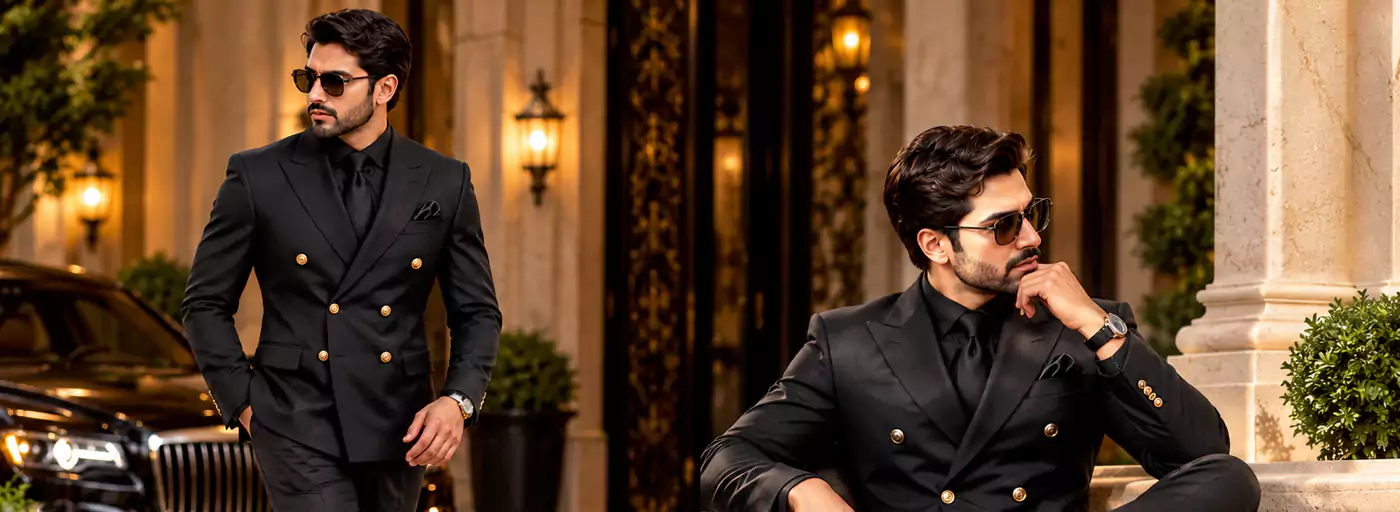
A suit should fit the man wearing it—not ask the man to spend the day adjusting himself.
Picture this. You are getting ready for a meeting, a celebration or a wedding. The suit looks fine on the hanger. You put it on, button the jacket and look in the mirror. Something feels off. The shoulders sit a little too wide. The sleeves swallow your shirt cuffs. The jacket pulls when you move. The trousers fall in a way that makes you keep tugging at them.
You adjust the collar. You pull the sleeves down. You stand straighter. You tell yourself it will do.
But here is the question: why should you have to adjust yourself to your suit?
That suit may have been made well. It may be made from good fabric. It may even look impressive on someone else. The problem is simpler: it was made to fit a standard, not to understand you.
That is where custom suits for men make a difference. Not because a label says “custom,” and not because tailoring has to be complicated. Because the suit begins with the person who will wear it: his proportions, his posture, his purpose and the way he wants to carry himself.
A good suit does more than fit. It feels like you.
Think about the first time you wear a suit that sits right. You are not conscious of the shoulder seam. You are not checking whether the trousers have ridden up. You can sit, walk, greet people, reach for a glass and move through the day without constantly negotiating with your clothes.
Your attention shifts away from the suit and back to the moment. That is the quiet achievement of good tailoring. It does not demand attention; it gives you the confidence to command it.
The right fit is not necessarily the tightest fit, the slimmest silhouette or the sharpest crease. It is the balance between shape and ease. A jacket should follow your shoulders without collapsing or straining. The chest should close comfortably. The sleeve length should work with your shirt. The trousers should sit securely and fall cleanly without pulling across the thigh or bunching unnecessarily at the ankle.
Most importantly, the suit should still work when you move. A fitting-room pose is only a moment. Your real life is not lived standing perfectly still in front of a mirror.
Custom tailoring starts with a conversation—not a measuring
tape.
Measurements matter. But measurements alone do not tell the whole story.
A skilled tailor needs to understand more than your chest, waist and sleeve length. Do you stand straight, or do your shoulders slope? Do you prefer room through the body, or a closer silhouette? Will you wear the suit for long office days, a formal dinner, a wedding ceremony or several events across a weekend? Do you spend much of the day seated? Will you travel in it? What do you want the suit to say before you have said a word?
These details influence the choices that follow: the cut, the jacket length, the rise and break of the trousers, the lapel shape, the fastening, the lining and the amount of structure through the shoulders. The tailor’s job is to bring these decisions together into one coherent garment.
That is the art of custom tailoring. It is technical, certainly—but it is also attentive. Two men can share the same measurements and still need different solutions. Their posture, proportions, habits, preferences and occasions may be entirely different.
So when you speak to a tailor, do not hesitate to explain how you want to feel in the suit, not just how you want it to look. A good consultation makes room for both.
Fabric, cut and construction: the choices you should not leave to chance
A suit can look striking in a photograph and feel wrong after two hours. Fabric and construction are part of the reason.
Start with the occasion and the conditions in which you will wear it. A suit intended for regular workwear has different demands from a wedding suit or a formal evening outfit. Climate matters too. Across India, the weather, travel plans and duration of an event can influence which fabric weight and composition make sense. Ask how the cloth will drape, how it is likely to crease, how much structure it needs and what care it will require.
Next, consider the cut. A classic silhouette can look contemporary when the proportions are right. A slimmer cut can look elegant without being restrictive. Lapel width, button stance, pocket details and trouser shape should support the overall design rather than compete for attention.
Then ask about the construction and finishing. How does the jacket hold its shape? Are the seams clean? Do the checks or stripes align where they should? Do the buttonholes, lining and finishing details feel considered? What alterations or fittings are included? You do not need to become a tailoring expert overnight. You simply need a tailor who can explain the choices clearly and help you understand what you are paying for.
The best custom suits in India are not defined by one fashionable detail or a price tag alone. They are the result of sound decisions—from cloth and cut to fit, finish and the purpose the suit has to serve.
Blue suit or black suit? Choose for the life you will wear it in.
When looking for the best suits for men, it is tempting to search for one colour that works for everything. In reality, the right choice depends on your wardrobe, your occasions and the impression you want to create.
A blue suit is a versatile starting point for many wardrobes. Depending on its shade, fabric and styling, it can work for business meetings, celebrations, daytime events and many weddings. Navy often feels formal and dependable; lighter blues can feel more relaxed. The shirt, shoes, tie and accessories will shift the mood further.
A black suit makes a strong, clean statement and has a place in formal wardrobes. But black does not automatically make an outfit right for every occasion. For daytime events, business settings or outdoor weddings, another shade may feel more appropriate. Think about the dress code and the setting before choosing.
Neither colour can compensate for poor fit. A beautifully chosen blue suit that pulls at the button or collapses at the shoulder will not look as considered as a well-balanced suit in a simpler shade.
If this is your first custom suit, begin with how often you will wear it and where. If you already own the essentials, a second suit can fill a different role. The goal is not simply to own more suits; it is to own the right ones.
Wedding suits for men: dress for the occasion, not just the photograph
A wedding suit has a demanding job. It has to look good in photographs, feel comfortable through long hours, work with the occasion and still feel like you. You may wear it for the ceremony, the reception, a family celebration or a series of functions spread across several days.
Before choosing a design, get clear on the event. Is it a daytime ceremony or an evening celebration? Is the mood traditional, contemporary, understated or black-tie? What are the venue, season and dress code? Will you be standing for long periods, greeting guests, dancing or travelling between locations?
A well-tailored navy or blue suit can suit many wedding settings. A darker suit may feel more formal. A tuxedo may be the right choice when the event calls for evening formality. For the groom, the design may also need to sit comfortably alongside the bride’s attire and the broader visual tone of the celebration—without turning him into someone he does not recognise.
Give the process enough time. Share the event date, discuss the look you have in mind and ask when measurements, fittings and final alterations should happen. Leaving everything until the final days can limit your choices and add unnecessary stress.
The best wedding suits for men are not simply the ones that photograph well. They are the ones that let you be present in your own celebration instead of spending it worrying about a collar, a tight button or a trouser hem.
A suit is not a tuxedo. Know the difference.
The terms are sometimes used loosely, but a suit and a tuxedo serve different purposes. A conventional suit is built around a jacket and trousers in matching cloth and can be styled for business, celebrations and a wide range of formal occasions. A tuxedo is typically eveningwear, distinguished by details such as satin or silk-faced lapels and matching trim, and traditionally worn with more specific formal styling.
The dress code should guide the decision. If an invitation specifies black tie, a tuxedo is generally the expected choice. If the occasion calls for formal businesswear or a wedding suit, a regular suit may be more suitable. When the wording is unclear, ask the host or event organiser rather than guessing.
Custom tailoring can help with either option, but the design should respect the purpose of the garment. A tuxedo should look like eveningwear; a business suit should feel right for the demands of the day. The details matter because they tell people that you understand the occasion.
Custom, made-to-measure or bespoke: what are you actually buying?
You will see several terms while researching tailoring. They are not always used consistently by every retailer, so ask what the process means in practice.
With custom or made-to-measure tailoring, a base pattern or established block is typically adjusted to the customer’s measurements and design preferences, with the exact process varying by maker. Bespoke tailoring is generally associated with a pattern created specifically for an individual and a more extensive fitting process. The distinction can depend on the tailor’s methods, so the name alone is not enough.
Ask how your measurements are recorded, how many fittings are planned, what can be customised, which alterations are included and what happens if the fit needs attention. Get clear information about the fabric, expected completion date and aftercare before you commit.
Do not choose a service because one term sounds more luxurious. Choose the process that fits your expectations, your budget, your schedule and the level of personalisation you need.
How to choose among the best suit tailors?
A search for the best suit tailors can bring up a long list of options. Instead of relying on claims alone, look for signs of a sound process.
Look closely at the fit. Do the shoulders, sleeves, chest and trousers look balanced across different customers—not just one carefully posed model?
Pay attention to the consultation. Does the tailor ask about your purpose, preferences and comfort, or jump straight to a standard recommendation?
Ask about fittings and alterations. A made-to-order garment still needs a clear process for checking fit and addressing adjustments. Understand what is included before placing the order.
Ask specific questions about fabric and construction. A reliable professional should be able to explain the options in straightforward language rather than hide behind jargon.
Check timelines and communication. A beautiful suit delivered after the event has missed its purpose. Share your deadline and ask for realistic milestones.
Finally, notice how you feel during the conversation. You should be able to ask questions, express preferences and understand the recommendations. The right tailor should make the process clear and help you make informed choices.
Your suit should work with you—not against you.
The difference between a suit that merely covers you and one that feels right is rarely one dramatic detail. It is the sum of thoughtful decisions: proportion, movement, fabric, construction, occasion and personal style.
So the next time you search for custom suits for men, the best suits for men or wedding suits for men, look beyond the photograph. Ask what happens after you place the order. Ask how the garment will be shaped around you. Ask whether the advice is built around your needs or around what is easiest to sell.
A good suit should not make you feel as though you are borrowing somebody else’s appearance. It should let you show up as yourself—with a little more assurance in the way you stand, move and meet the moment.
Explore the New Wear Well custom suit collection and start with the details that matter to you: the occasion, the fit, the fabric and the way you want to wear it.
New Wear Well. Since 1885.
At New Wear Well, men’s custom tailoring has been part of our story since 1885. A suit should do more than follow measurements. It should respect the person wearing it—his proportions, his purpose and his presence.
New Wear Well — Men’s Custom Tailoring Since 1885.
Rule The Hearts.
 No products in the cart.